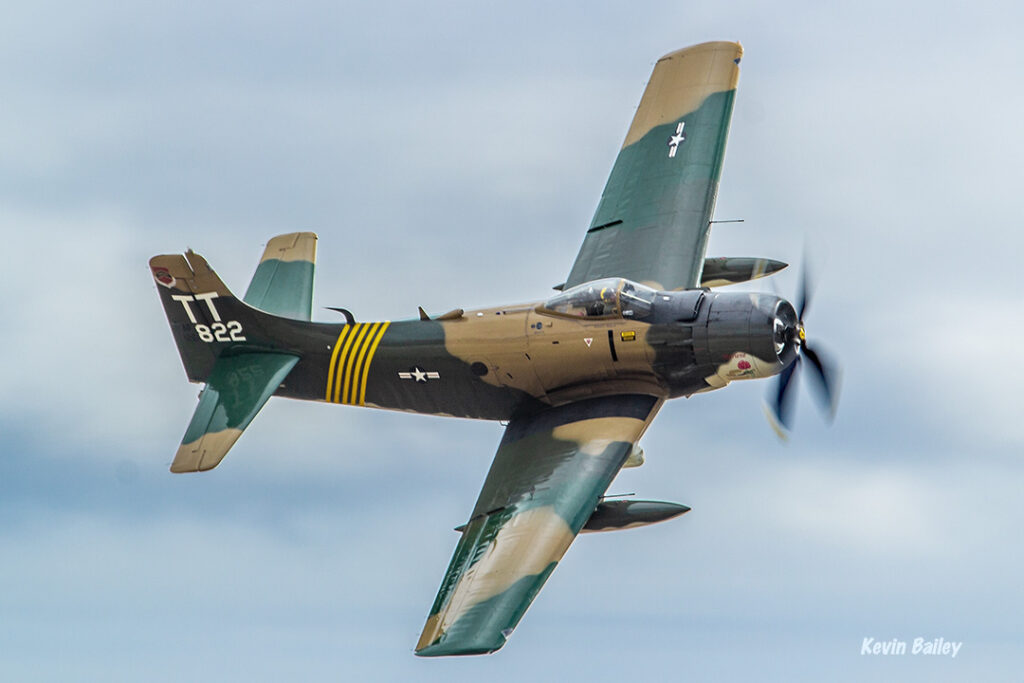
The Douglas A-1E Skyraider is one of the most iconic and battle-proven attack aircraft of the Vietnam War—famous for its power, unmatched endurance, and ability to deliver precise close air support when it mattered most. As a rugged, piston-engine aircraft in the jet age, the Skyraider carved out a reputation for bravery and reliability, flying missions no other platform could sustain. For troops on the ground and downed aircrew awaiting rescue, the sound of a Skyraider overhead meant help had arrived.
The A-1E variant featured increased payload capacity, strengthened wings, and improved mission versatility, making it one of the most widely used and trusted versions in Southeast Asia. During Vietnam, Skyraider pilots escorted rescue helicopters, protected isolated ground forces, struck hardened targets, and remained on station longer than any jet in the theater. Its famous loiter time—measured in hours, not minutes—made the Skyraider irreplaceable for Search and Rescue, close support, and lifesaving cover in the most dangerous conditions.
The Vietnam War Flight Museum’s A-1E Skyraider, is one of the few flying examples of this historic aircraft. Restored to represent its Vietnam War appearance, the A-1E is flown in its historically significant “Uncle Ho” paint scheme, reflecting markings associated with psychological operations and propaganda imagery used during the conflict. The scheme provides powerful cultural and historical context for airshow audiences, illustrating how symbolism, messaging, and morale played major roles throughout the war.
Beginning in 2026, FIGHTERJETS INC will proudly present the A-1E Skyraider at select airshows across the country. Its deep radial engine rumble, broad wings, and unmistakable silhouette bring to life an era when piston and jet aircraft fought side by side. As part of FIGHTERJETS INC’s expanded historic jet lineup—including the MiG-17, F-4 Phantom II, F-100 Super Sabre, A-4 Skyhawk, and Me 262—the A-1E Skyraider anchors the Vietnam-era story by reminding audiences that brute strength, endurance, and heart were as decisive in battle as speed and technology.
|
OPERATIONAL DATA:
|
|
| Rate of Climb: | 2,300 ft/min |
| Service Ceiling: | 28,500 ft |
| Top Speed: | 322 mph |
| Engine: | Wright R-3350-26WA Duplex Cyclone Radial Engine |
| Power: | 2,700 hp |
| Max. weight: | 25,000 lbs |